 $ROBIN
Robinhood Chain · Uniswap v4 · ROBIN / HOOD
$ROBIN
Robinhood Chain · Uniswap v4 · ROBIN / HOOD
Hold $ROBIN. Earn $HOOD.
3% on every trade. The team takes none of it. The creator's entire share is reflected to holders as real tokenized Robinhood stock.
Not 50% to the creator. Not points. Not more of our own token. The creator's cut is set to zero on-chain — after the launchpad's fixed platform fee, 2.4% of every trade lands in holders' wallets as equity. No staking, no claiming, nothing to press.
The mechanic
Where the 3% goes
Every trade on the ROBIN/HOOD pair pays a 3% fee. It does not go to a treasury, a marketing wallet, or the person who launched this — the creator's share is set to zero on-chain. Here is the whole split, and you can read it off the contract yourself.
Of the 3% fee, the Lunch launchpad takes a fixed 20% platform cut that nobody can change. The remaining 80% is the creator's share, and it is routed 100% to holders — the creator receives nothing.
Somebody trades
Any buy or sell on the ROBIN/HOOD pair pays a 3% fee. Volume is the fuel — it does not matter which direction it goes.
It becomes $HOOD
The fee is taken in tokenized Robinhood stock — the other side of the pair. There is no conversion step to trust and no treasury holding the bag.
The tracker splits it
An on-chain distributor divides it across every eligible wallet, weighted by how much $ROBIN you hold. Bigger bag, bigger slice.
It lands in your wallet
The contract pushes payouts out automatically as people trade. No staking. No claiming. Nothing to sign. You just hold.
Paid in equity
- The creator's share is routed 100% to holders
- You receive $HOOD, not more $ROBIN
- $HOOD can rise on its own, independent of this coin
Nothing to do
- No staking contract to enter
- No claim button, no gas to spend claiming
- Payouts are pushed automatically as trades happen
Holding is the product
- Rotating out costs you the next distribution
- Every trade by everyone else pays the holders
- The longer the chart chops, the more holders collect
The reward asset
You get paid in this
Most coins reward you with more of themselves. When the chart falls, your rewards fall with it. $ROBIN pays you in a tokenized share of a real listed company that trades on its own.
Tokenized Robinhood Markets stock
Trades 24/7 natively on Robinhood Chain
Reflections come from the 3% fee on the ROBIN/HOOD pair on Robinhood Chain, of which 2.4% reaches holders after the launchpad's fixed platform cut. They scale with trading volume, they are variable, and they are not guaranteed. Nobody sets or promises a rate. See every payout on the explorer →
Check your purse
See what your wallet has earned
Paste any address. We read it straight off the chain — no wallet connection, no signature, no permissions. You can check somebody else's too.
No wallet connection required. Read-only.
The arithmetic
Run the numbers yourself
The whole model is one line of maths, so here it is with the dials exposed. Move them and watch what volume does to a bag.
daily volume × 2.4% to holders × your share of eligible supply
Illustrative only. These figures are arithmetic on numbers you chose, not a forecast, a promise, or an expected return. Real reflections depend on actual trading volume, your share of eligible supply at the moment of each distribution, and the price of $HOOD — all of which move constantly. Rewards are not guaranteed. This is not investment advice.
The difference
Why this is not the usual arrangement
Reward tokens are not new. What is unusual is who gets the fee, and what the fee is paid in.
| $ROBIN | Typical reward coin | Holding $HOOD directly | |
|---|---|---|---|
| Who gets the fee | Creator's share routed 100% to holders — team takes 0% | Commonly split with the creator or a treasury | No fee, no distribution |
| What you are paid in | Tokenized Robinhood stock | More of the same token, or the chain's gas token | Not applicable |
| If the memecoin chart falls | Your rewards are still equity that trades on its own | Your rewards fall with it | Unaffected |
| Effort required | None — pushed to your wallet | Often staking, claiming, or both | None |
"Typical reward coin" describes the common pattern in this category and is not aimed at any specific project.

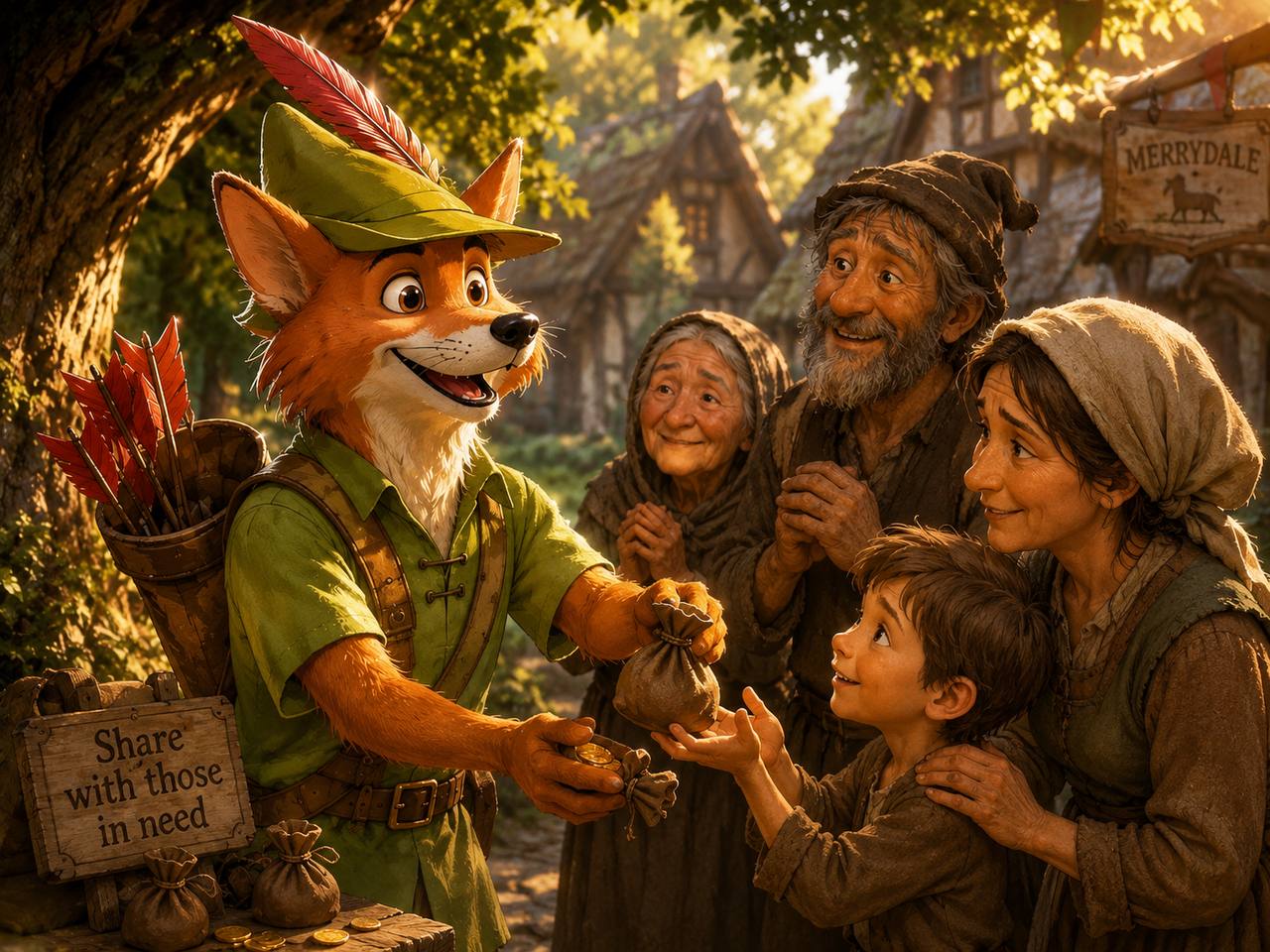
Share with those in need
Robinhood's whole pitch was to democratise finance for all. We took that literally and pointed the fees back at the people holding the bag.
Take from the flow, give to the holders. It is the oldest story there is — and for once the mechanic actually matches the mascot.
The noticeboard
Don't trust us. Read the contract.
Every claim on this page is either configuration or verifiable on-chain data. Here are the addresses so you can check all of it yourself.
On Chain
Signed by the contract itself, not by us. Every address below opens on the public block explorer — the source is verified and the bytecode is immutable.
Source code verified
The token contract is published and verified on the block explorer. You can read every line of it, including the part that pays you.
Token has no owner, no admin keys
The token contract has no owner function. Nobody can pause trading, blacklist a wallet, or touch your balance — the ability was never written in.
Liquidity locked forever
The launch liquidity sits in a locker contract that has no withdraw function at all — and its upgrade path is permanently frozen in code, so one can never be added. Nobody can pull it, including the team.
Liquidity compounds, never shrinks
The 0.30% pool fee is auto-compounded straight back into the locked position by a function anyone can call. The pool can grow. It has no mechanism to be drained.
Fixed supply, no mint
One billion $ROBIN, minted once at launch. There is no mint function and no burn function. The number cannot change.
Cannot become a honeypot
The reward logic is wrapped so that a failure in it can never block a transfer. If the distributor broke entirely, rewards would stop — but selling would still work.
No transfer restrictions
No max wallet, no max transaction, no cooldown, no trading toggle. Wallet-to-wallet transfers are not taxed at all — the 3% is a fee on trading the pair.
Distributor is permanent
The reward tracker was linked once at launch and cannot be swapped afterwards. Where your rewards come from cannot be redirected.
These are statements about published, verified source code, checkable on the explorer. They are not a third-party audit, and they do not remove market risk.
How to buy
Getting a bag
$ROBIN lives on Robinhood Chain, an Arbitrum-stack L2 where tokenized equities trade around the clock. If you have never used it, this takes about three minutes.
Add Robinhood Chain to your wallet
Any EVM wallet works — MetaMask, Rabby, whatever you already use. Add the network with these details:
Chain ID 4663 RPC rpc.mainnet.chain.robinhood.com Gas token ETH Explorer robinhoodchain.blockscout.comGet ETH on the chain for gas
Bridge a small amount of ETH across for transaction fees. You do not need much — this is an L2 and fees are pennies.
Get $HOOD, the other side of the pair
$ROBIN is quoted against tokenized Robinhood stock rather than a stablecoin. Swap into $HOOD first — it has its own deep pool against USDG, the chain's dollar.
Swap $HOOD for $ROBIN on Uniswap v4
Use the contract address below so you land on the right token. Slippage needs headroom for the 3% fee — start around 5% and raise it only if the trade fails.
Do nothing at all
That is the entire strategy. Rewards are pushed to your wallet automatically as other people trade. Come back and check your purse whenever you like.
Tokenomics
All of it, on one line
Supply is fixed and was minted once at launch. Liquidity pool and launch contracts are excluded from rewards, which is why the earning supply is lower than the total.
Questions
The honest answers
Do I have to stake anything?
No. There is no staking step and no staking contract. Holding $ROBIN in your wallet is the entire requirement.
Do I have to claim my rewards?
No. The contract pushes payouts out automatically as trading happens. $HOOD arrives in your wallet on its own. There is no claim button and no gas for you to spend collecting.
Are rewards guaranteed?
No. Reflections are produced entirely by trading volume on the pair. If nobody trades, there is nothing to distribute. Amounts vary constantly with volume, with your share of eligible supply, and with the price of $HOOD. Nobody sets a rate and nobody promises one.
So how much of the 3% actually reaches me?
2.4% of the trade. The Lunch launchpad takes a fixed 20% platform fee off the top — that is hardcoded in the hook and nobody, including us, can change it. The remaining 80% is the creator's share, and it is routed entirely to holders. The creator takes zero. That is why we say the team takes none of it rather than claiming the full 3% reaches you.
How is my share worked out?
Pro rata by balance. Your share of a distribution equals your $ROBIN balance divided by the total eligible supply at that moment. The liquidity pool and launch contracts are excluded, so real holders get a larger slice than a naive supply-based calculation would suggest.
What actually is $HOOD?
A tokenized share of Robinhood Markets stock that trades natively on Robinhood Chain, around the clock. It is the other side of our trading pair, which is why the fee can be paid in it directly with no conversion step to trust.
Is this affiliated with Robinhood?
No. $ROBIN is an independent community token with no affiliation with, endorsement by, or sponsorship from Robinhood Markets, Inc. We use Robinhood Chain the way any project uses a public blockchain, and $HOOD is a tokenized asset that trades on it.
Does sending $ROBIN to a friend cost 3%?
No. Plain wallet-to-wallet transfers are not taxed. The 3% is a fee on trading the pair, so moving your own tokens between your own wallets costs nothing beyond gas.
Where can I see the payouts?
On the block explorer. Open the reward distributor address and look at its outgoing $HOOD transfers — that is every distribution, to every wallet, permanently. Open the distributor →
Can the team take my tokens?
No. The token contract has no owner function and no admin controls over balances. There is no pause, no blacklist, no mint, and no way to freeze or seize what is in your wallet. Read the verified source on the explorer if you would rather check than take our word.
Can the team change the fee?
The tax is not in the token — it lives in a separate hook contract, and the creator address can still change it there. Two honest caveats: the rate is capped in code at 5% per side and cannot exceed that, and the holder share is currently set to the maximum, meaning the creator receives nothing. But it is not frozen, and anyone telling you a launchpad token's fee routing is immutable has not read the contract. Both settings are public — watch the RatesSet and RewardsBpsSet events on the hook.
Is the liquidity locked?
Yes, permanently. The launch liquidity was seeded into a locker contract that has no withdraw or remove-liquidity function of any kind, and whose upgrade path reverts by design — so a withdraw function can never be added later, by anyone, including the team. On top of that, the 0.30% pool fee is auto-compounded back into the locked position by a function any wallet can call, so the position can grow but has no mechanism to shrink. Read the locker →
What happens if the reward system breaks?
Distributions would stop, but trading would not. The reward logic is deliberately wrapped so a failure inside it can never block a transfer. The token stays sellable no matter what happens to the distributor.
Can I lose money?
Yes, all of it. This is a memecoin and carries every risk that implies, including going to zero. Reflections reduce nothing about that risk — they are a feature of the token, not a floor under the price. Never buy with money you cannot afford to lose entirely.
Hold $ROBIN. Earn $HOOD.
Every trade somebody else makes pays you in Robinhood stock. All you have to do is not sell.